Who is Margaret Mitchell?
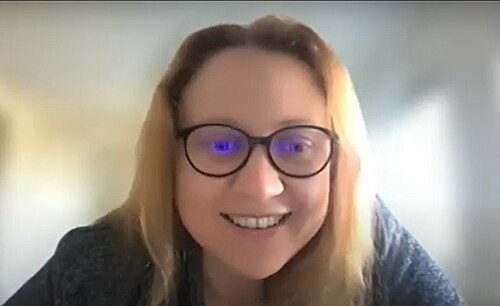
Margaret Mitchell is an American computer scientist who works on fairness, transparency and ethics in AI, and is chief ethics scientist at Hugging Face. Mitchell founded and co-led Google's Ethical AI team with Timnit Gebru until Google fired Mitchell in 2021, and introduced Model Cards, a way to document what a model is for and where it falls short.
Last checked Nov 4, 2026 · 4 sources
- Now
 Hugging FaceChief Ethics Scientist
- From
- USA
Experience
- 2021 to now
Hugging Face
Chief ethics scientist
 2016 to 2021
Google
Senior research scientist; founder and co-lead of the Ethical AI team
 2013 to 2016
Microsoft Research
Researcher; research lead of the Seeing AI project
 2012 to 2013
Johns Hopkins University
Postdoctoral researcher, Human Language Technology Center of Excellence
Education

University of Aberdeen
PhD, thesis on generating references to visible objects, 2013

University of Washington
Master's in computational linguistics, 2009

Reed College
BA
What is Margaret Mitchell doing now?
Mitchell is chief ethics scientist at Hugging Face, which Mitchell joined in late 2021, and works on data governance, model evaluation and AI ethics. In November 2026 MIT Technology Review quoted Mitchell in that role on how AI agents could help older people who struggle with modern interfaces.source
What is Mitchell known for?
Model Cards
Short documents that ship with a trained model and state its intended use, how it was evaluated and how well it works for different groups.source In the Encyclopedia
Google's Ethical AI team
Mitchell founded and co-led Google's Ethical AI team with Timnit Gebru, studying bias and harm in Google's AI systems.source In the Encyclopedia
SHADES
A dataset built from 16 languages and 37 regions that tests whether language models repeat or amplify stereotypes.source In the Encyclopedia
Seeing AI
A Microsoft app that narrates text and images for people who are blind or have low vision. Mitchell was its research lead.source In the Encyclopedia
Why does Mitchell matter?
Model Cards gave the field a simple way to publish what a model is for, how it was tested and where it may fail. Mitchell now leads ethics work at Hugging Face, the platform where many open models are shared.
How did Mitchell get here?
- 2013
Joined Microsoft Research, where Mitchell led research on Seeing AI, an app that describes text and images for people with low vision.source
- 2016
Became a senior research scientist at Google in November and went on to found the Ethical AI team.source
- 2018
Gave the TED talk How we can build AI to help humans, not hurt us, and co-wrote Model Cards for Model Reporting.source
- 2021
Was fired by Google weeks after co-lead Timnit Gebru's exit, and joined Hugging Face late in the year.source
- 2023
Named to the TIME100 list of the most influential people in AI.source
- 2025
Led the international team behind SHADES, a dataset for spotting stereotypes in chatbot answers across 16 languages.source
How can you learn from Mitchell for free?
- PaperModel Cards for Model Reporting
The paper that introduced Model Cards.
- WatchHow we can build AI to help humans, not hurt us (TED)
Mitchell's 2018 talk on bias in AI and building it responsibly.
Questions people ask about Mitchell
Where does Margaret Mitchell work now?
At Hugging Face, as chief ethics scientist. Mitchell joined the company in late 2021.source
Why was Margaret Mitchell fired from Google?
Google said Mitchell had moved thousands of files and shared them with outside accounts. The firing in 2021 followed the exit of Mitchell's Ethical AI co-lead, Timnit Gebru.source
What are Model Cards?
Short reports that accompany a machine learning model and explain what it is for, how it was evaluated and where it performs worse, introduced by Mitchell and colleagues in 2018.source
What is SHADES?
A dataset Mitchell's team built to find harmful stereotypes in language model answers, covering 16 languages from 37 regions.source
Who has Mitchell worked with?
Learn the ideas behind this work
- AI Ethics
- AI Bias & Fairness
- Responsible AI
- Datasheets, Data Cards and Model Cards
- Natural Language Processing (NLP)
- Computer Vision
Want a full plan? The AI Roadmap has one for your role, free, counted in hours.